
Concrete Pools vs Fibreglass Pools
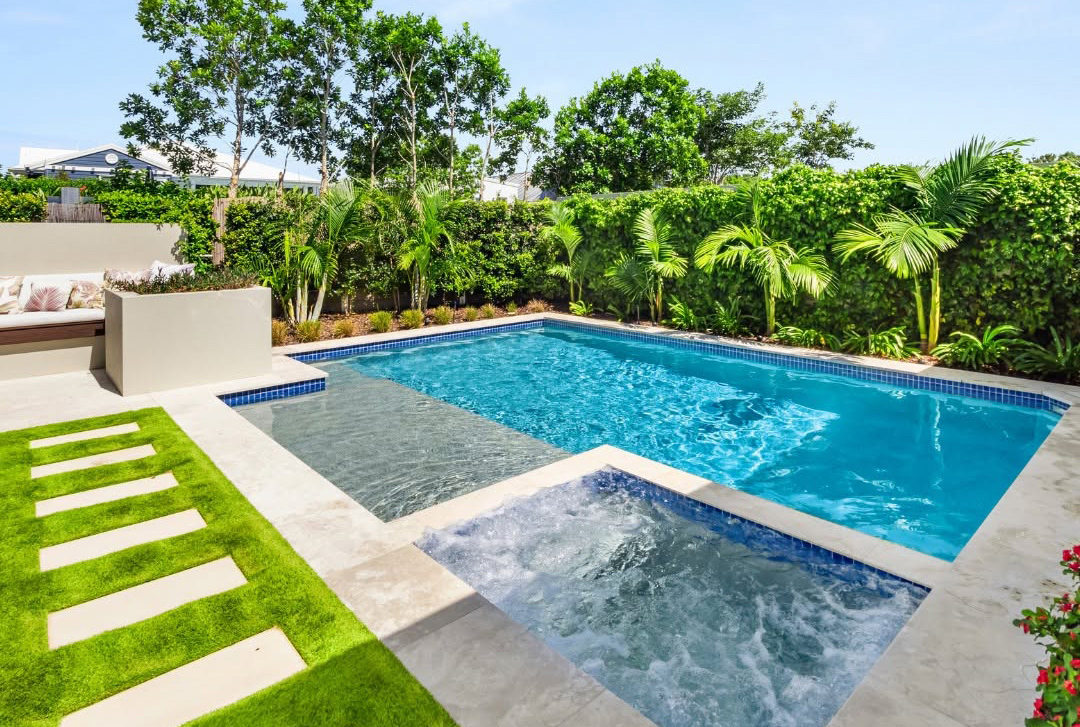
Costs, Maintenance, Lifespan & Which Type Suits Your Gold Coast Block
Concrete and fibreglass pools can both provide decades of enjoyment, but they solve different problems. The right choice depends on your block, your budget, your design goals, and how much flexibility you want over the life of the pool.
Most Gold Coast homeowners start by asking which type is cheaper. That turns out to be the wrong first question. Your site conditions, access, and long-term plans matter more than most buyers realise before they sign a contract. This guide covers the full comparison and the questions buyers most commonly search for before choosing a pool type.
Short Answer:
Concrete pools offer complete design flexibility and are the preferred solution for challenging sites, custom designs and homeowners looking for a long-term investment. Fibreglass pools can be a good option where a standard shape, faster installation and lower upfront cost are the priority. On the Gold Coast, access, slope and site conditions often determine which option is the most practical, making a professional site assessment the best place to start.
What Is the Actual Difference?
Concrete pools are built on-site using steel reinforcement and sprayed or poured concrete. Every pool is engineered and constructed specifically for the property, allowing complete freedom over the size, shape, depth and finish. Fibreglass pools are manufactured off-site as a single pre-formed shell before being transported to your property for installation.
In simple terms, a concrete pool is designed around your home, while a fibreglass pool requires your home to suit the available moulds. That distinction influences everything from design and installation through to long-term flexibility.
| Feature | Concrete | Fibreglass | Best For... |
|---|---|---|---|
| Upfront cost | From ~$45,000+ | From ~$45,000+ | Budget-first buyers: fibreglass |
| Build time | 6 to 12 weeks | Faster installation | Fast turnaround: fibreglass |
| Design flexibility | Fully custom | Mould-based shapes | Custom shapes or depths: concrete |
| Difficult site access | Excellent | Depends on access | Narrow or complex blocks: concrete |
| Day-to-day maintenance | Higher | Lower | Simpler upkeep: fibreglass |
| Surface resurfacing | Yes, pebble or tile | Typically not | Long-term flexibility: concrete |
| Structural lifespan | 50+ years | Long-lasting shell | Both are long-term investments |
Cost: Which Pool Type Is Cheaper?
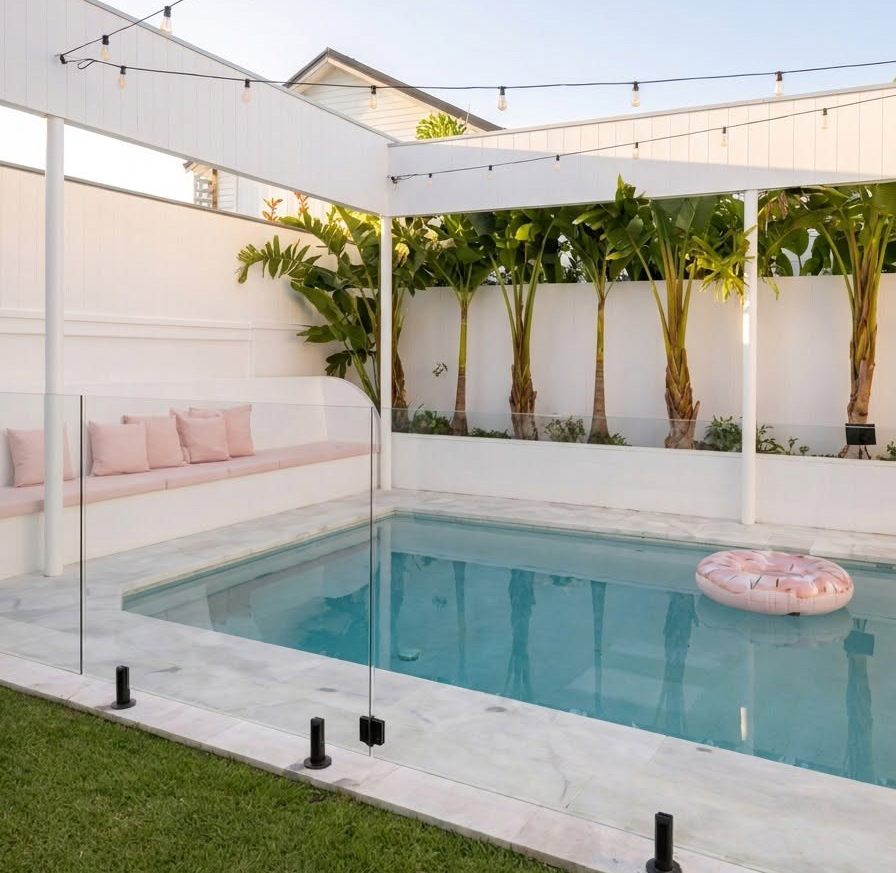 Fibreglass pools generally cost less upfront. The shell is manufactured in a factory, and installation is faster, reducing labour time. Concrete pools cost more because the engineering, on-site construction, and finishing are all done at your property.
Based on current Gold Coast and South East Queensland market data, fibreglass pools typically start from around $45,000 to $80,000 or more fully installed (Domain, 2025).
Custom concrete pools on the Gold Coast typically start from around $45,000, with most complete projects ranging from $70,000 to $120,000 or more, depending on size, complexity, and finishes.
These figures are indicative only and reflect general market conditions at the time of writing. Pool costs vary significantly based on site conditions, design complexity, finishes, and current material and labour prices. A site-specific quote is the only reliable way to budget accurately for your property.
Upfront price is only part of the story. On difficult Gold Coast sites, retaining walls, access challenges, and extra earthworks can significantly change the final cost of either pool type. A fibreglass shell on a sloping block that requires extensive cut-and-fill work can end up costing more than a concrete pool engineered to suit the site from the start.
For a detailed breakdown of cost drivers on Gold Coast and Queensland sites, see the guide to what impacts the cost of building a pool in Queensland.
What adds to the final cost of either pool type?
- Site access: narrow side access or sloping blocks require smaller machinery and more labour
- Soil conditions: rock, reactive clay, or high water tables all affect excavation cost
- Pool fencing: mandatory in Queensland, from aluminium to frameless glass
- Interior finish: pebblecrete is the standard option; full tiling or glass bead finishes cost more
- Integrated features: spas, water features, and sun ledges add to both cost and complexity
- Council approvals and permits: required in Queensland before construction begins
Think of the investment differently. With fibreglass, you're purchasing a pre-manufactured product. With concrete, you're investing in a custom-built structure that's engineered specifically for your property. While the initial investment may be higher, many homeowners consider the flexibility and longevity well worth it.
Installation Time: Fibreglass vs Concrete
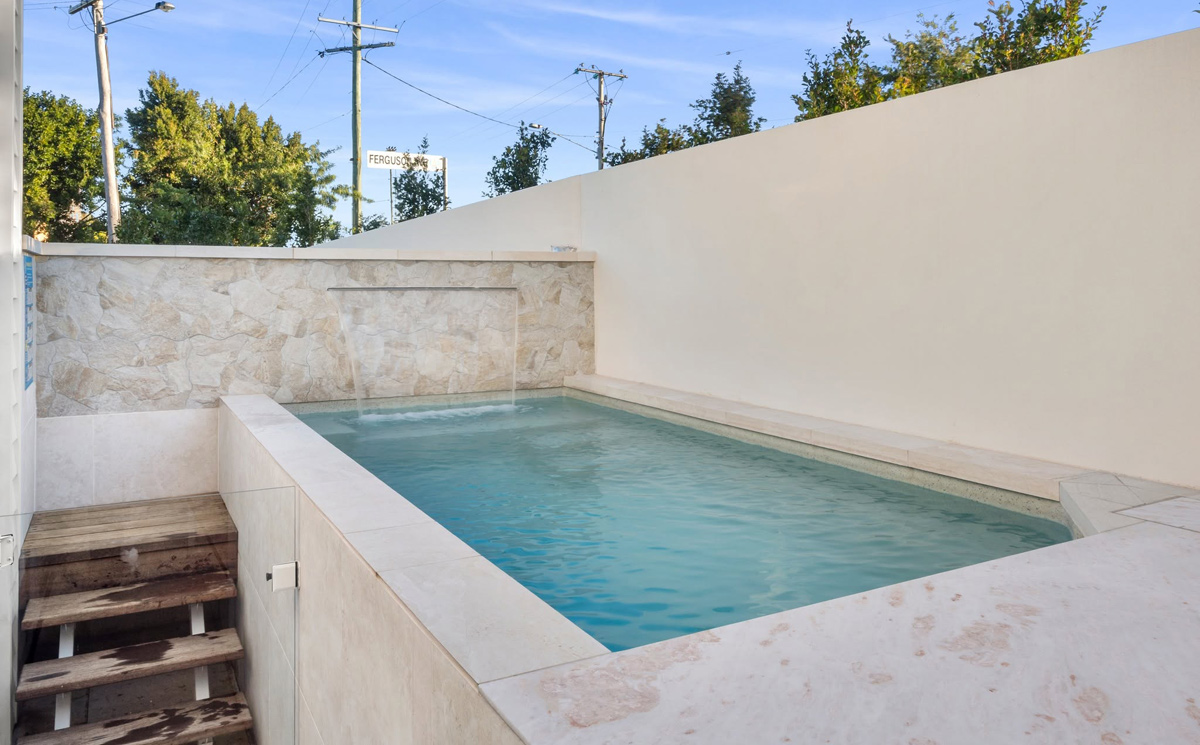
Fibreglass pools are generally faster to install. The shell arrives pre-manufactured, so once excavation is complete, it can be placed within days. The overall project timeline still depends on council approvals, fencing certification, and site conditions, but the on-site construction phase is significantly shorter than the concrete phase.
Concrete pools require excavation, steel fixing, shell construction, curing, coping, tiling, and interior finishing. The build from excavation to fill typically takes 6 to 12 weeks, depending on site complexity and weather. The trade-off is that every stage is tailored to your property. Rather than adapting your site to fit a pre-manufactured shell, the pool is engineered and built specifically for your block, allowing complete freedom over its design and construction.
For either pool type, Queensland council approvals and pool safety certification are required before the pool can be filled, and these timelines sit outside the builder's control.
Maintenance: Which Pool Type Is Easier to Look After?
Both concrete and fibreglass pools require regular maintenance to keep the water clean, balanced and safe for swimming. The main differences are in surface care, water chemistry management and long-term resurfacing.
 Concrete pool maintenance
Concrete pool interiors are porous, so they require more active water chemistry management than fibreglass. pH and alkalinity should be monitored regularly, and the surface benefits from periodic brushing to discourage algae from establishing. The Queensland climate, with its humid summers and high UV levels, can also increase chemical demand during peak swimming season.
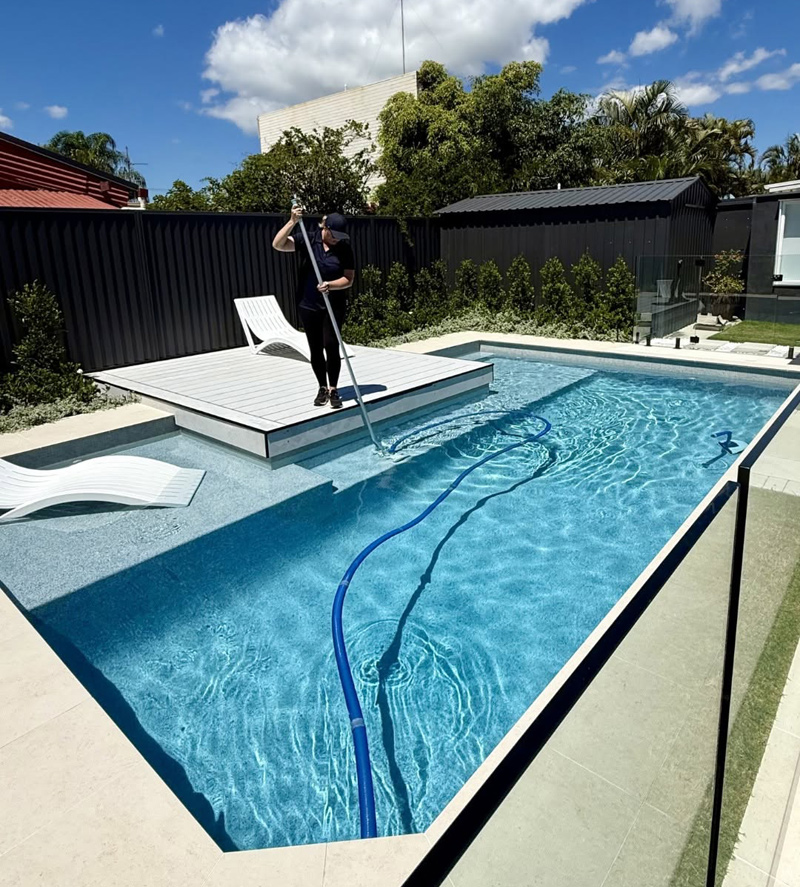
The good news is that maintaining a concrete pool is much easier than it once was. Modern robotic pool cleaners can automatically scrub the floor, walls and waterline while vacuuming debris, significantly reducing the amount of manual brushing required. Combined with automated chlorinators, efficient filtration systems and variable-speed pumps, much of the routine maintenance can now be automated, making the difference between concrete and fibreglass pools less significant than many homeowners expect.
For pools built on the Gold Coast, generally recommended targets at the time of writing are chlorine levels between 2 and 3 ppm and a pH between 7.2 and 7.6, with testing every day or two during summer. Always check the recommendations provided by your pool professional, as ideal water chemistry can vary depending on your pool and equipment.
One long-term advantage of concrete is that the interior finish can be resurfaced when it eventually wears. While this is a maintenance cost over the life of the pool, it also provides the opportunity to refresh the pool's appearance or repair the surface without replacing the underlying structure.
Fibreglass pool maintenance
Fibreglass pools have a smooth, non-porous gelcoat surface that is naturally more resistant to algae growth. As a result, they generally require less brushing and may use slightly fewer chemicals, making routine maintenance somewhat simpler.
The trade-off is the gelcoat itself. Depending on the quality of the shell, UV exposure and ongoing water chemistry, the surface may become more difficult to restore to its original factory finish over time. Unlike concrete, which can be resurfaced, refurbishment options for fibreglass are generally limited to painting or applying a new coating. In the Gold Coast's harsh UV conditions, this is an important consideration when comparing long-term ownership.
| Maintenance Factor | Concrete | Fibreglass |
|---|---|---|
| Routine surface brushing | Periodic | Less frequent |
| Chemical demand | Moderate to higher | Lower |
| Surface resurfacing option | Yes, pebble, tile or other interior finishes | Limited, gelcoat cannot typically be restored |
| Algae resistance | Lower (porous surface) | Higher (non-porous surface) |
| Long-term surface flexibility | High | Low |
Lifespan: How Long Does Each Pool Type Last?
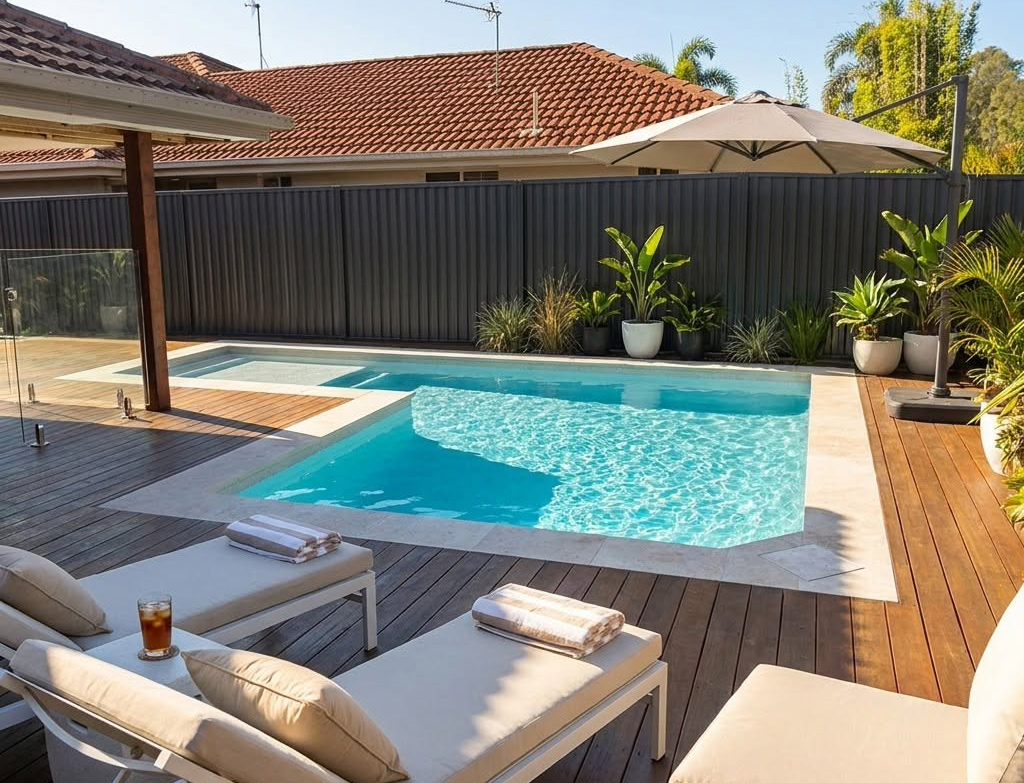 A well-built concrete pool can last 50 years or longer. The concrete shell itself can remain structurally sound for many decades when properly engineered and maintained. What needs attention over time is the interior finish, which can be resurfaced, and the equipment (pump, filter, chlorinator), which is replaced as needed.
A fibreglass pool shell is also durable and resistant to cracking under normal conditions. The manufacturer's warranty on the shell typically covers structural defects for a defined period. The gelcoat surface is often the component that shows age first. Depending on product quality, UV exposure, water chemistry, and maintenance practices, fading, staining, or surface wear may become evident over time, and the gelcoat cannot be fully restored.
Both pool types offer excellent structural longevity. The key difference is that a concrete pool can evolve over time. While equipment is replaced and interior finishes can be renewed, the concrete structure remains. Rather than reaching the limits of a factory finish, your pool can continue to be refreshed and updated for decades.
The Gold Coast Site Factor
The Gold Coast is one of Australia's most varied building environments. Within a few suburbs, you can find flat canal blocks, steep hinterland lots, narrow courtyard sites, and older inner-suburb blocks with minimal side access. That variety is where the concrete vs fibreglass decision often gets made for you, not by you.
Access and delivery
A fibreglass shell is manufactured as one piece, typically 3 to 5 metres wide and 8 to 12 metres long. Getting it to your backyard requires enough clearance to crane or tow it through. On many older Gold Coast streets and established suburbs, side access is 900 mm or less. In these situations, a fibreglass shell may not be deliverable without significant modification to fencing or structures.
Concrete pools are built in place using materials that can be delivered to almost any site. Materials arrive in manageable loads, and the pool is formed on your site. That's why concrete is often the preferred solution for narrow access, sloping blocks and complex architectural homes.
Sloping blocks
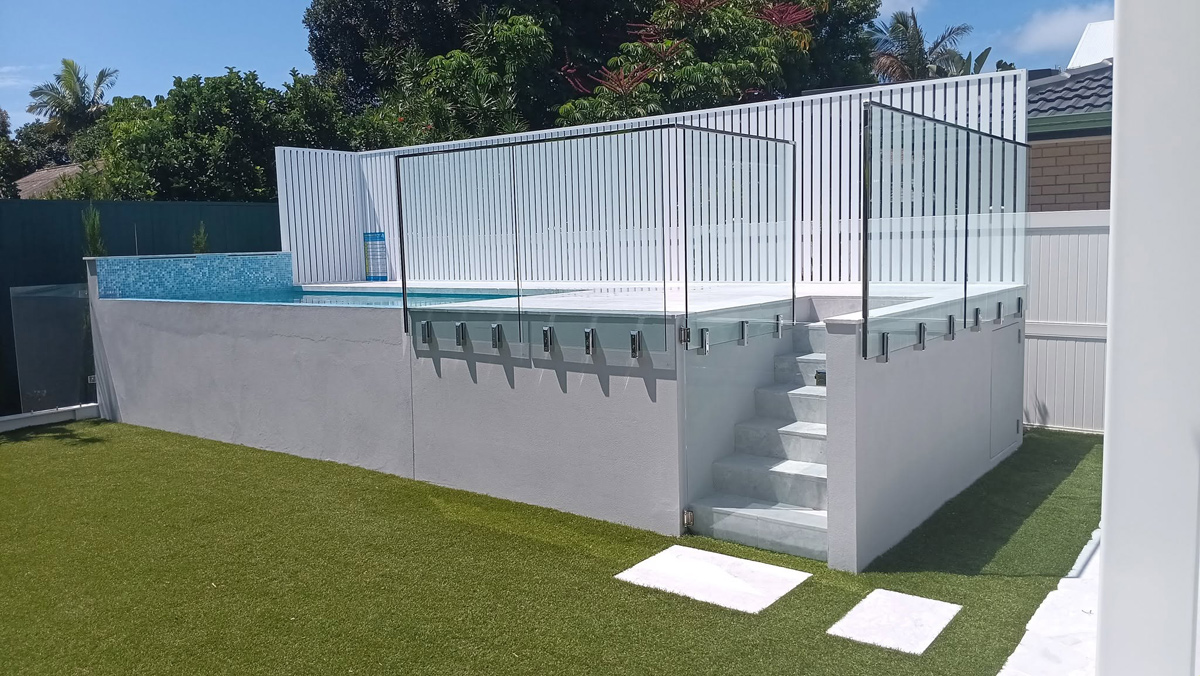
Sloping and elevated blocks are common across the hinterland and parts of Burleigh, Currumbin, and Palm Beach. Fibreglass pools can be installed on sloping sites, but significant earthworks and engineering may be required depending on the grade. Concrete can be engineered for virtually any slope, and Burleigh Pools specialises in complex elevated builds.
Read more about designing pools on sloping Gold Coast blocks.
Canal-front and high water table sites
Canal-front properties can face elevated water tables. When groundwater pressure is significant, pool shells typically need to be ballasted or engineered to resist uplift. Concrete structures can be weighted and anchored during the build. Fibreglass shells may be at greater risk of movement in some high water table conditions if drained without appropriate hydrostatic management, depending on site engineering.
Common Misconceptions About Each Pool Type
'Fibreglass is always cheaper'
Fibreglass typically costs less on a simple flat block with easy access. On difficult sites, additional earthworks, retaining walls, and access modifications can close the price gap or reverse it. Total project cost depends on what the site requires, not just the pool type.
'Concrete pools are too much work to maintain'
Concrete pools require more active water chemistry management than fibreglass due to the porous surface. With a consistent routine, including weekly brushing and regular chemical testing, the workload is manageable. The trade-off is a surface that can be resurfaced and updated, something fibreglass gelcoat does not offer.
'Concrete pools crack'
Concrete pools built to engineering specifications and properly cured are structurally sound for decades. Cracking is more commonly associated with poor construction practices or soil movement than with concrete as a material. Choosing a licensed, experienced builder and ensuring the pool is engineered for your specific soil conditions significantly reduces this risk.
Side-by-Side Comparison
| Feature | Concrete | Fibreglass | Notes |
|---|---|---|---|
| Design flexibility | ? | X | Concrete suits any shape or depth. Fibreglass is limited to the manufacturer's moulds. |
| Difficult site access | ? | X | Fibreglass shells often cannot pass through narrow side access. |
| Sloping blocks | ? | ~ | Concrete is engineered for any slope. Fibreglass may require significant earthworks. |
| High water table sites | ? | ~ | Concrete can be ballasted. Fibreglass requires hydrostatic management if drained. |
| Build time | X | ? | Fibreglass installs faster. Concrete typically takes 6 to 12 weeks. |
| Upfront cost | ~ | ~ | Fibreglass generally costs less upfront on simple flat blocks. |
| Integrated spa/water features | ? | X | Concrete allows seamless integration. Fibreglass requires add-on spas. |
| Interior finish options | ? | X | Concrete offers pebble, tile, or render. Fibreglass is limited to factory gelcoat. |
| Long-term resurfacing | ? | X | Concrete interiors can be renewed. Fibreglass gelcoat is typically not restorable. |
| Ongoing maintenance effort | X | ? | Fibreglass needs less frequent brushing and lower chemical use. |
| Structural lifespan | ? | ? | Both types offer excellent structural durability when well built. |
Legend: ? = Advantage in this category | ~ = Depends on site conditions | X = Relative disadvantage
Which Pool Type Is Right for Your Block?
One of the biggest differences between concrete and fibreglass is how they approach the design process. Fibreglass asks which of the available shells best suits your property. Concrete starts with your property and designs the pool around it. As a general guide:
Concrete is likely the better fit:
- Side access is under 1.2 metres wide
- Your block slopes more than a gentle grade
- You want a fully custom shape, depth, or size
- You need an integrated spa or water features
- You want pebble, tile, or a premium interior finish
- Long-term renovation or resurfacing flexibility matters
- The site has a high water table or reactive soils
- You are building on an elevated or hinterland block
Fibreglass may work well if:
- Your block is flat with wide, clear side access
- A standard shape and size suits your needs
- Faster installation is a priority
- Lower upfront cost is your primary consideration
- Simpler ongoing maintenance suits your lifestyle
Pool Designs Available from Burleigh Pools
Burleigh Pools builds a range of popular concrete pool styles, but these are simply starting points. Unlike fibreglass pools, which are limited to factory moulds, every concrete pool can be customised to suit your home, your lifestyle and your site. Whether you're looking for a compact plunge pool or a large waterfront design, the dimensions, features and finishes are tailored specifically to your project.
Geometric Pools
Clean lines and defined edges. Geometric pools suit modern architecture and work well on rectangular blocks. Common formats include rectangle, L-shape, and stepped designs.
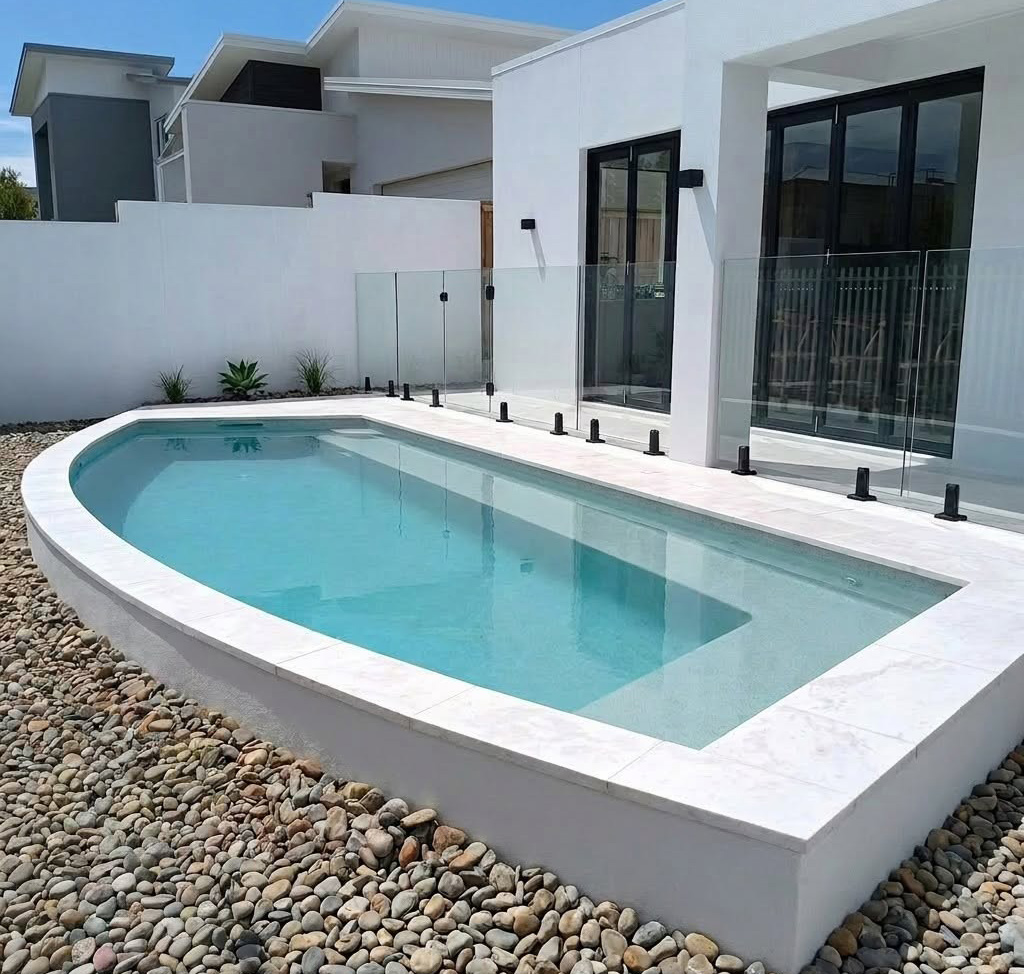 Freeform Pools
Organic curved shapes for tropical landscaping and irregular blocks. Freeform designs are built entirely to your brief with no mould constraints.
Lap Pools
Long, narrow pools for exercise and fitness. Concrete construction allows a lap pool to be sized exactly to your run length and combined with a spa or entry feature.
Plunge Pools
A compact solution for smaller blocks or courtyards. Typically deeper than a standard pool, prioritising immersion over swimming distance. View the range at our Plunge Pool page.
Spa Pools
Integrated concrete spas built adjoining any pool or as a standalone feature. Concrete construction allows a seamless visual connection between spa and pool, with shared filtration where needed.
How a Concrete Pool Gets Built
A custom concrete pool follows six key stages from engineering plans to handover.
Stage 1: Plans
Engineering plans are prepared and submitted to a private certifier. A start date is confirmed once approved.
Stage 2: Excavation
The site is excavated to the engineered depth. Steel reinforcement is delivered.
Stage 3: Structural Shell
The site is boxed and steeled, then the concrete shell is poured in one continuous pour.
Stage 4: Coping and Tiling
Coping is laid around the pool perimeter. Tile band and feature tiles are installed.
Stage 5: Filtration
Pump, filter, chlorinator, and equipment are installed and connected.
Stage 6: Interior Finish
Pool fencing is completed and certified. The pebble or interior finish is applied, and the pool is filled.
View a detailed guide to the pool construction process.
Frequently Asked Questions
Which pool type is cheaper?
Fibreglass typically has a lower upfront cost, starting from around $45,000 to $80,000+ on the Gold Coast. Concrete pools can start from around $45,000, with most projects ranging from $70,000 to $120,000+. On difficult sites, the cost difference may narrow once earthworks and access requirements are factored in. Both figures are indicative only.
Is a concrete pool worth the extra investment?
For many homeowners, yes. While a concrete pool may involve a higher upfront investment, it offers complete design freedom, can be engineered for challenging sites, integrates seamlessly with landscaping and outdoor living areas, and can be resurfaced as it ages. If you're planning to stay in your home long-term or want a pool designed specifically for your property, concrete often provides greater long-term value.
Why choose a concrete pool instead of fibreglass?
Concrete pools aren't limited to standard moulds, allowing you to choose the exact size, shape and depth that suits your home. They're also ideal for sloping blocks, narrow access sites and premium outdoor spaces where a custom design is important. For many Gold Coast properties, concrete offers greater flexibility both during construction and throughout the life of the pool.
Are concrete pools difficult to maintain?
Not as much as many people expect. While concrete pools do require more active water chemistry management than fibreglass, modern robotic cleaners, automated chlorinators and efficient filtration systems take care of much of the routine work. With a consistent maintenance routine, caring for a concrete pool is straightforward and well within the capabilities of most homeowners.
How long does it take to build a concrete pool?
Most custom concrete pools take around 6 to 12 weeks from excavation to completion, depending on the complexity of the project and weather conditions. Council approvals, engineering and pool certification also form part of the overall timeline.
How long do concrete pools last?
A well-built concrete pool can remain structurally sound for many decades when properly engineered and maintained. Interior finishes are renewed over the life of the pool as needed.
Can fibreglass pools be installed on sloping blocks?
In some cases, yes. Suitability depends on the gradient and what earthworks are required. On steeper Gold Coast blocks, a custom concrete pool may be the more practical option.
Is a concrete pool worth more for resale?
A well-designed inground pool can improve the appeal and marketability of a Gold Coast property, particularly in lifestyle-focused suburbs. The impact on value depends on location, build quality, and the overall presentation of the home.
How do I know which pool type is right for my property?
Every block is different. Factors such as site access, slope, soil conditions, drainage and your preferred pool design all influence the best solution. A professional site assessment can identify any construction challenges early and help you choose the option that delivers the best long-term outcome for your home.
About Burleigh Pools
Burleigh Pools is a family-owned business based at Burleigh Heads, Gold Coast. The company has won over 120 state and national SPASA awards for quality, craftsmanship, and innovation, and is fully licensed in both Queensland and New South Wales. The display pool at their Burleigh Heads showroom was awarded SPASA's Best Display Pool in Queensland in 2019.
Concrete Pool vs Fibreglass Pool: The Bottom Line
Both concrete and fibreglass pools have their place, but they are designed to suit different priorities.
If your goal is the quickest installation on a simple, flat block and you're happy choosing from a range of pre-designed shapes, a fibreglass pool may be a suitable option.
However, if you're investing in a long-term addition to your home, concrete offers clear advantages. It gives you complete freedom over the size, shape and depth of your pool, integrates seamlessly with spas, water features and landscaping, and can be engineered to suit challenging Gold Coast sites where fibreglass simply isn't practical.
While concrete pools require a little more ongoing care, modern robotic cleaners, automated filtration and sanitising systems have made routine maintenance far easier than many homeowners expect. In return, you gain a pool that can evolve with your home, with interior finishes that can be refreshed decades into the future rather than replaced.
For many Gold Coast properties, particularly sloping blocks, waterfront homes, narrow access sites and custom-designed landscapes, concrete isn't just the premium option, it's often the most practical one.
Still Deciding Between Concrete and Fibreglass?
Choosing the right pool isn't just about comparing prices or installation times. Every property is different, and factors like site access, slope, soil conditions, drainage and the way you want to use your outdoor space all influence the best solution.
At Burleigh Pools, we've been designing and building custom concrete pools across the Gold Coast for decades. From compact plunge pools to award-winning waterfront projects on challenging sites, we've seen first-hand where concrete delivers the greatest long-term value.
A free site consultation is the best place to start. We'll assess your block, discuss your vision, explain what's possible, and provide honest advice on the most practical solution for your property. If a custom concrete pool is the right fit, we'll show you exactly how we can bring it to life.
Book your free site consultation today and take the first step towards a pool designed specifically for your home.
Every block is different. Factors such as site access, slope, soil conditions, drainage and your preferred pool design all influence the best solution. A professional site assessment can identify any construction challenges early and help you choose the option that delivers the best long-term outcome for your home.
Back To Articles